

This just isn’t true of asymmetric keys, which typically have to be considerably longer. Cryptographic keys could also be either static (designed for long run usage) or ephemeral (designed to be used only for a single session or transaction). The crypto-period (i.e., lifetime) of static keys could range from days to weeks, months, or even years relying on what they are used for. Once an encryption algorithm (such as RSA, ECC, or AES) is chosen, both key length and randomness play a important function in making certain knowledge remains protected against evolving cyber threats. The transition to post-quantum cryptography requires planning today, even earlier than quantum computer systems are operationally viable. European rules, including the CSA, increasingly require organizations to reveal their cryptographic posture.
Post-200-day Actuality: Lessons Learned And The Path To Full Automation
Researchers constantly analyze mathematical foundations and uncover new assaults against previously trusted algorithms and key sizes. New methods are rarely designed with state-of-the-art cryptography because compatibility requirements push teams towards older, extra widely supported algorithms. The result is a rising gap between the cryptography an enterprise makes use of and what standards organizations and government institutions suggest for safety. This lifecycle, from adoption to deprecation, is not a one-time event but a steady process that requires ongoing monitoring and willingness emigrate.
Maybe probably the most elementary problem is simply figuring out what cryptographic implementations exist within an organization’s software portfolio. It is extraordinarily troublesome to determine whether or not a piece of software program is using the proper cryptographic implementations, as a outcome of the software is compiled and the supply code is often unavailable for evaluate. OS-level cryptographic libraries, embedded firmware, and hardware safety modules further complicate discovery. With Out a dependable approach to stock cryptographic usage, organizations can’t assess their exposure to obsolete algorithms, misconfigured implementations, or quantum-vulnerable ciphers. Cryptographic keys are the key values that power every encryption and decryption operation. The safety of any cryptographic system in the end relies upon not simply on the energy of its algorithms but on how nicely its keys are managed all through their lifecycle.

Symmetric Encryption

Widespread symmetric algorithms embrace AES (Advanced Encryption Standard) and ChaCha20, with AES being the present normal for many purposes, together with disk encryption, database encryption, and VPN tunnels. For high-value functions and information, and when hardware-backed key security is unavailable or insufficient, embrace software-based key protection. White-box cryptography provides a strong different for protecting keys in software purposes.
- Understanding how they differ is crucial to constructing efficient safety architectures.
- Swift revocation is important for limiting the harm, stopping unauthorized access, and sustaining the integrity of encrypted communications.
- On the opposite hand, cryptographic keys can include any string of bits.
Public Key Infrastructure (pki)
Hardware Security Modules (HSMs) are extremely efficient tools for cryptographic key protection and may be mandated in certain use instances, like securing root keys in PKI. This bodily gadget can perform important cryptographic features corresponding to encryption, decryption and key technology in a safe and isolated surroundings.. Utilizing an HSM removes the burden of safe key storage from a software’s logic and reduces the prospect that hackers will get entry to information and the keys they need to decrypt it in a single place. Different hardware-backed options embody trusted platform modules (TPM) and trusted execution environments (TEE), which give hardware isolated systems to perform cryptographic operations.
Usually, a session key’s used with a symmetric algorithm to transmit the majority of the information effectively. In apply, this can be overcome utilizing a key agreement protocol similar to Diffie Hellman, however an alternative approach for brief messages or low-bandwidth communication is to use an uneven algorithm. Here, the sender can encrypt the message with the intended recipient’s public key, and the recipient can use their corresponding personal key to decrypt it. Anyone who will get a maintain of a message that has been encrypted will only see random information. Solely the one who is meant to get the message and has the right non-public key can learn the message. While the public key may be freely shared with anybody, the recipient must maintain the non-public key secret.
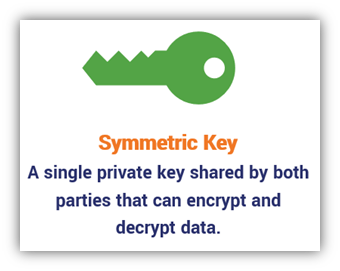
Symmetric algorithms are used for encryption/decryption of most data. Applications can save these keys for later use or for transmission to different users through the use of the ExportKey operate to export them from the CSP into software space within the type of an encrypted “key BLOB”. The key BLOB might then be imported by another application using the ImportKey function. A source of physical entropy, corresponding to a physical cube roll or coin toss, is required to generate really random numbers. For instance, when users generate a public key pair utilizing the Pretty https://miamicottages.com/essays-on-ways-to-conserve-water.html Good Privacy (PGP) public key encryption program, they are prompted to generate entropy by randomly transferring their mouse.
In business transactions, belief is much more necessary than privacy. PKI uses the personal key to permit an utility to signal a document. For the recipient to authenticate the sender, it needs a dependable method to get hold of the general public key for the sender. This public key is supplied in the form of a digital certificates, which is mediated by a trusted third celebration certificate authority (CA). Similarly, you can encrypt a message for anybody else by utilizing their public key, and they decrypt it by utilizing their private key. You can then ship the message safely over an unsecured connection.
